It is to make it easier for the right buyer to understand why this particular property is worth paying attention to.
That changes the prep list quite a bit.
A territorial home on a couple of acres with mature desert, an old horse setup and a few original details I would fight you over should not get the same pre-listing prescription as a newer home in a planned neighborhood. Sometimes we paint. Sometimes I would rather leave the old tile alone. Sometimes the most productive thing we can do has nothing to do with decorating and everything to do with finding a permit, understanding the septic system or getting a clear answer about the land.
So before we start ordering light fixtures because somebody on the internet said brass is back, I would rather figure out what we are actually selling.
The short answer: Preparing a Cave Creek home for sale starts with understanding what makes the property difficult to replace, gathering the information a thoughtful buyer is going to want, taking care of the maintenance and presentation issues that distract from it, and being very selective about anything we change simply for the sake of making it feel updated.
Start with what somebody is actually buying
Bedrooms, bathrooms and square footage matter. Of course they do.
But they are rarely the whole story here.
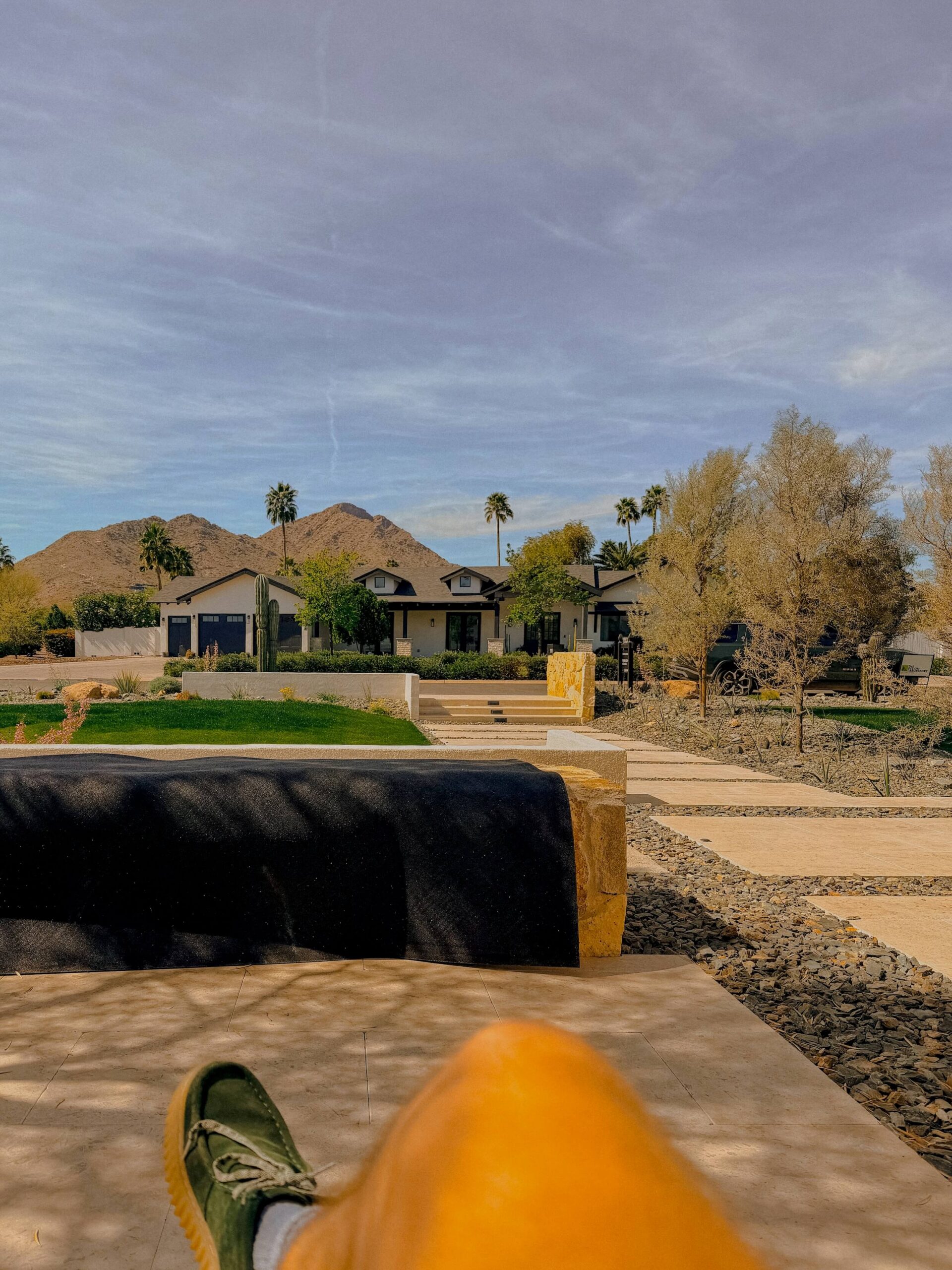
A buyer may be responding to the usable acreage. The way the house sits against Black Mountain. A courtyard that has softened over twenty years. Room for horses. A workshop. Natural desert behind the house. An unusually private site. Original adobe, Saltillo tile or architecture that would be fairly difficult to recreate now.
Those are not side notes to save for the listing description after everything else has been decided. They should help shape the entire preparation and marketing plan.
One of the easiest mistakes to make before selling is spending money making a house more generic because generic feels safe.
I would rather first ask: what would I be annoyed to see somebody erase from this house?
That usually gets us somewhere much more useful.
Before we improve anything, I want the boring information
This may be the least glamorous part of getting a house ready for market, but it can save a surprising amount of scrambling later.
Properties around Cave Creek can come with details buyers do not encounter in every part of the Valley. Depending on the property, I may want to understand the water source, septic or sewer connection, permits for additions and improvements, road access or maintenance, easements, washes or floodplain considerations, zoning, horse-related improvements and what portion of the acreage is actually useful for what a buyer imagines doing with it.
Not every house has all of those questions. Plenty have almost none of them.
The point is that I do not like waiting for a buyer to raise an obvious property-specific question before we start looking for the answer.
The Town of Cave Creek maintains building permit and zoning information that can help answer some of those property-specific questions. For homes with an onsite wastewater system, Arizona also has a formal transfer process, with current requirements available through the Arizona Department of Environmental Quality.
That does not mean we need to turn the listing into an engineering report.
It means I want us to know the property we are selling.
Then we decide what is actually worth fixing
This is where I think a generic home selling checklist starts to fall apart.
I do not automatically think you should paint the entire house, replace every light fixture, change perfectly good hardware, landscape it within an inch of its life and buy a smart thermostat because those things appeared on a list.
The better question is whether something is helping the house, neutral, or actively getting in the way.
Deferred maintenance usually deserves our attention. A dripping faucet, obviously damaged paint, broken hardware, burned-out bulbs, a door that will not close properly or a pool that looks neglected can make buyers start wondering what else has been ignored.
Cosmetic preference is different.
A dated-but-beautiful bathroom may be part of the house’s appeal. Good original cabinetry does not automatically need to become white. Mature desert should still look like mature desert when we are finished with it.
And if an update is expensive enough that we are essentially making a design decision on behalf of a buyer we have not met yet, I want a pretty compelling reason before I recommend doing it.
The preparation that usually earns its keep
Once we know what should stay and what actually needs attention, the basics become much easier.
A deep clean matters. Clean windows matter enormously in a house where the view or natural light is part of the experience. Touch-up paint can help when walls look visibly tired. Landscaping should feel tended to without pretending a Cave Creek property is supposed to look like a suburban lawn.
Decluttering is useful too, although I prefer editing to stripping every room down until the house loses its personality.
Counters should have room to breathe. Closets should be reasonably organized. The stack of mail should probably disappear. But a house can still look like somebody with a pulse lives there.
I am trying to remove the things that keep a buyer from seeing the property clearly, not remove every trace of the person who made it interesting.
If you are also trying to understand the financial side of getting a property ready for market, I have a separate guide to what it costs to sell a home in Cave Creek. I would keep that conversation separate from this one because the amount worth spending before a sale depends very much on the property.
Staging should make the house easier to understand
Not every home needs professional staging.
Sometimes the right move is simply rearranging furniture so a room’s scale makes more sense. Pulling one oversized chair out. Moving art. Adding something where a space photographs strangely empty. Editing a collection without banishing every interesting object to a storage unit.
And sometimes a vacant or unusually configured property really does benefit from proper staging because buyers need help understanding how the rooms work.
The house gets to tell us which problem we are solving.
That is much more useful than assuming staged automatically means neutral furniture, three beige pillows and a bowl of decorative lemons that nobody has ever eaten.
Photo day is the final edit, not the beginning of the work
By the time photography is scheduled, the bigger decisions should already be made.
This is where the old photo-day checklist belongs, but it does not need to become an entirely separate project.
The photo-day pass
A day or two before
- Finish the deep clean.
- Clean windows, glass and mirrors.
- Finish yard, patio and pool cleanup.
- Put away excess countertop items.
- Remove visible pet supplies where practical.
- Tuck away loose cords and chargers.
- Make sure every light fixture is working.
That morning
- Straighten bedding and pillows.
- Open window coverings where appropriate.
- Clear sinks and bathroom vanities.
- Empty visible trash cans.
- Put away remotes, chargers and countertop clutter.
- Straighten outdoor furniture.
- Move vehicles out of the primary exterior shots.
Before the photographer starts
Walk the house once more looking at it as a camera will. A crooked lampshade suddenly becomes unbelievably interesting once you know somebody is about to photograph it.
Professional photography is part of how I market a listing because for many buyers, the first real encounter with the property happens on a screen.
But photography can only photograph the story we have given it.
If the best thing about the house is the way the afternoon light comes across an original wall, I want the photographer to know that. If the lot is the real story, we need to show the land rather than producing 42 nearly identical photographs of the interior.
This is also where understanding the buyer matters. The goal is not simply to make everything look large and bright. It is to show the reasons somebody would choose this property instead of the ten others they have open in browser tabs.
Do not forget the outside of the house
Especially here.
A buyer considering Cave Creek may care as much about what happens beyond the back door as what happens in the kitchen.
That means I am looking at the arrival to the property, the driveway, gates, gravel, native landscaping, patios, outdoor living areas, pool equipment, fencing, horse facilities where applicable, outbuildings and how easily someone can understand where the usable parts of the lot begin and end.
This does not require manicuring the desert until it stops looking like the desert.
Sometimes clearing a few obviously dead plants, pruning appropriately, sweeping the patio and putting the furniture back where it belongs is enough.
Other times there is a view or a piece of the land that has become visually lost and deserves a little more attention.
Your marketing should explain what the checklist cannot
Getting a home clean and photographable is useful. It is not the whole listing strategy.
Pricing, photography, copy, showing strategy and the order in which the property’s features are presented should all reinforce the same idea about why the house is worth considering.
A custom Cave Creek home with acreage should not be marketed like a commodity simply because price per square foot is easy to calculate.
Likewise, I do not want to invent a romantic story about a house when the more compelling reason to buy it is simply that it is extremely well located, well maintained and easy to live in.
The interesting thing is whatever is actually true.
That is what we should make visible.
A few things I would want to know before your house goes live
By the time we are ready to list, I want us to have a pretty good handle on the home’s condition, its relevant records, what we chose to improve and why, what we intentionally left alone, the property’s strongest features, any questions the land or systems are likely to create, and how we are going to explain all of that to the market.
That is a very different exercise from making everything new.
And frankly, I think it produces better listings.
Because the best version of your Cave Creek home is probably not the version that looks the most like everybody else’s.
It is the version a buyer can understand.
Thinking about selling?
Before you start changing things, let me come see the house.
I am always happy to walk through a Cave Creek property with you, talk about what I would address, what I would leave alone and what I think deserves to be part of the story when it comes to market.
Selling in Cave Creek
Frequently asked questions
How far in advance should I start preparing my Cave Creek home to sell?
I would rather see the property before you begin making major changes. For some homes, preparation may be mostly cleaning, landscaping and a few repairs. Others may benefit from more lead time for contractors, staging, records or property-specific questions. Starting early gives us more choices without assuming that a long project list is necessary.
Should I renovate my home before selling?
Not automatically. I would look at the home’s current condition, the likely buyer, comparable properties and whether the proposed improvement solves an actual problem. A large renovation shortly before selling can mean spending significant money based on somebody else’s hypothetical taste.
Do I need to stage my Cave Creek home?
Sometimes. Occupied homes may only need editing or furniture changes, while vacant or unusually configured properties can benefit more from staging. The decision should be based on what helps buyers understand the home rather than staging simply because it appears on a seller checklist.
What should I do to prepare for listing photos?
Have the home clean and fully prepared before the photographer arrives, then do a final pass for countertops, bedding, window coverings, personal items, pet supplies, trash cans, cords, exterior furniture and vehicles. Photography day should be the last small edit rather than the day major preparation begins.
What property information should I gather before selling in Cave Creek?
It depends on the property, but useful records may include permits and improvement documentation, roof or major-system information, HOA documents when applicable, well or septic records, surveys and information related to easements or significant land improvements. Cave Creek properties vary enough that I prefer to make the list property-specific rather than hand every seller the same packet.